Tuesday, August 30, 2022

LeRoy Meisinger - WWI Journal: Leaving Home

 After three and half months in Lincoln, the Regimental Band is ordered to Deming, New Mexico. Here LeRoy describes the day he left for Deming. It is a touching description of a young man leaving his family for an uncertain future. A sentiment one can assume is felt by all the soldiers leaving for training and then eventually to war.

September Fourteenth (1917)

Some of the companies of the Sixth were to train before us, and it was our solemn duty to parade down O Street and escort them to the station, where they entrained for Deming.

Our minutes at home could not be counted. We were excused until eleven forty-five, so we drove home, and ate my last little lunch at home. As much as one dislikes to do it, the goodbye must be said, when one goes away. It was harder, I am sure, on the home folks for us to leave than it was for us. We all felt somehow that we were obeying them proper impulse, and in spite of the fact that we hated to go – we went.

The whistle blew, and we were off, down O Street on our last march in Lincoln. There were several hundred people at the station. Mama and Papa were there, but they left before the train in order that they might see us pass North Thirty-Third Street. While it was a hard farewell, the tug at the heart strings was far harder when the train passed my parents at Thirty-Third Street; Mama was sadly waving – almost automatically – a small silk flag I had given her, and Dad stood staring at the train, and stiffly waving his hat.

Wordless Wednesday - LeRoy’s Journal Dedication

 LeRoy’s Journal Dedication


LeRoy Meisinger - Arriving Camp Deming, NM: WWI Journal Entries Dated 17-18 September 1917

 “Just out of El Paso we were temporarily delayed by a landslide but passing that we sailed merrily along for Deming. The day was cloudy and occasionally did the sun break thru. There were detached mountain ranges all about, but, in the immediate vicinity of the train, the land was flat and sandy, covered with cactus, horned-toads, tarantulas, and here and there a transient Mexican family seated about a camp fire beside their covered wagon.

At five o’clock the trained pulled into Deming. A fine mist was blowing and the sky was gray. We were forbidden to leave the train, but we could see out the window, extending off to the north lines of tents and rows of wooden mess shacks - almost as far as the eye could reach. In the distance long lines of motor trucks were to be seen; and as the train came to a stop the motors began to purr and move forward. They traveled at high speed across the soft red sand and soon were unloading our baggage. In due time we left the train and marched for a mile and a half to our headquarters. It was getting dark when the trucks began to unload their cargo of boxes, trunks and so forth.

As very often happens, a mistake was made, which resulted in all our baggage being left at the wrong company street; the solution was simply to move it all by hand. And even the sergeants worked! Fortunately, I rescued all my goods from the chaos.

It was raining, and almost dark, when we discovered that only three tents had been set up to accommodate a company of approximately sixty. These were intended for the regimental staff, the supply sergeant and the band director. But we went together, and those who couldn’t get into one of these three tents, slept on the tables in the mess shack. In Barry’s tent, where I slept, there was the Chief and Principle Musicians, two sergeants, three corporals and two privates.”

After we had all our equipment in the tents, piled about the center pole and our cots set up (see picture attached for Ernest Harrison) Harrison, Max Bixby and I set out to find a pie, some photo supplies, and a telegraph office, respectively. It was very dark and little puddles of water were all about. There was no light save the glare of the lights on passing autos, and the weird glow of the incinerators. For two miles we walked stepping into water frequently. Finally, we reached the station where I forwarded my telegram.


LeRoy's friend, Ernest Harrison.


Next, we strolled up the main street of Deming. In general appearance, Deming is like any other small town except that a romantic color is added by the soldiers and Mexicans, both of which appear in great profusion. The streets had the appearance of a foreign bazaar. We went up one side and down the other, found some excellent malted milks and pies, then started home.

The road that was two miles up was four miles back. Once I stepped into water up to my knee, which seemed to appeal to the odd sense of humor that my companions possessed. It was pitch dark and muddy. The stars were beginning to break thru the clouds, which gave us hope for a bright morrow. At last, we were home, and tired enough to turn in for our first cool night in Camp Cody.”

*  *  *

“We arose at five o’clock after a very cool night. But that was soon forgotten in the beauty of the sunrise. The sun was breaking thru the clouds, happily revealing the Florida mountains to the southeast, the Tres Hermana to the south and a range to the north. They are going to be good friends to us. Sometimes their heads are in the clouds and others they stand out brilliantly in the morning sun.”

Special thank you to Michael Kromeke for the picture of Ernest Harrison. Check out Michael's website for more amazing pictures from Camp Cody during WWI: https://campcodydeming.wordpress.com/


LeRoy Meisinger - War Diary

 I found LeRoy's WWI diary! But more about that later... For now here is the first entry:

IX

Ante-Bellum Preface

I am beginning a diary of my service in the army. It may be very short; or it may cover many pages. But, from the situation at present, it looks as if it might be a long one. A few months ago we did not dream for a moment that the European conflagration might sweep our shores. But now, we are a part of it; and if the developing program of war is carried out, our men will be swarming the shores of France, carrying Democracy across the Atlantic.

And it is my privilege to be a part in this war of righteousness! A small part, to be sure, but a part. And no matter, if it shall be accorded me no greater service that that which can be rendered as a private or musician in the band. If I do that as well as I can. I will be entitled to be proud that I was a part of the Great War.

I have enlisted with a group of my friends in an organization which, I believe, offers me the opportunities for the best service, but what will it lead to is useless to guess, for there are no more uncertain quantities than the fortunes of war.

But the diary! Will it be worth while? And why am I starting it? To the first question, I can only hope for an answer. I will be one of millions, and my story will very likely contain no harrowing tales of danger nor deeds of bravery. Indeed, it will likely contain no different story than a hundred thousand other diaries being started at this moment. But if no more, it will serve its purpose in the answer to my second question. I am starting it, primarily that I may send it home in loose leaf form to my parents, and those to whom they may choose to read it.

I will endeavor to be fair and tell things as they really happen, in order that the whole may be a true account of my experiences - interesting or commonplace, as the case may be. If it is interesting, perhaps it will be worth preserving, if commonplace its immediate purpose justifies it.

So here goes, my diary!

June 3, 1917                                                                                                                     C.L.M.

TO MY PARENTS

For whom

Each day of my Service bespeaks

a greater Sacrifice

than I could have been called upon to make,

THIS DIARY IS AFFECTIONATELY DEDICATED

LeRoy Meisinger - A Man at Work

 This blog is all about a fascinating and amazing man, Clarence LeRoy Meisinger. LeRoy was my grandfather's cousin...but more about that later. This is a picture of LeRoy at work. He is the man in the center looking at the camera and wearing a cap. ((Not just a cap, it is also known as a flat cap, cabbie cap, gatsby cap, longshoreman's cap, cloth cap, scally cap, Wigens cap, ivy cap, derby hat, jeff cap, duffer cap, duckbill cap, driving cap, bicycle cap, Irish cap, newsboy cap, crook cap, Vergon hat, Joao's hat, sixpence, or a paddy cap, and in regional varieties: in Scotland as a bunnet, in Wales as a Dai cap, and in New Zealand, as a cheese-cutter...per wikipedia.))


So...any clue about his profession?


LeRoy Meisinger - Family Life

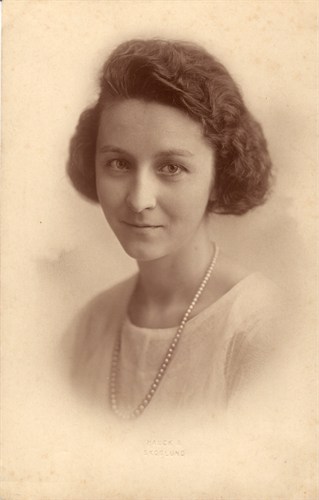
LeRoy and his wife, Helen Hilton Meisinger. My guess this picture was taken around the time of their engagement or marriage. Isn't she beautiful!